sábado, 28 de julho de 2012

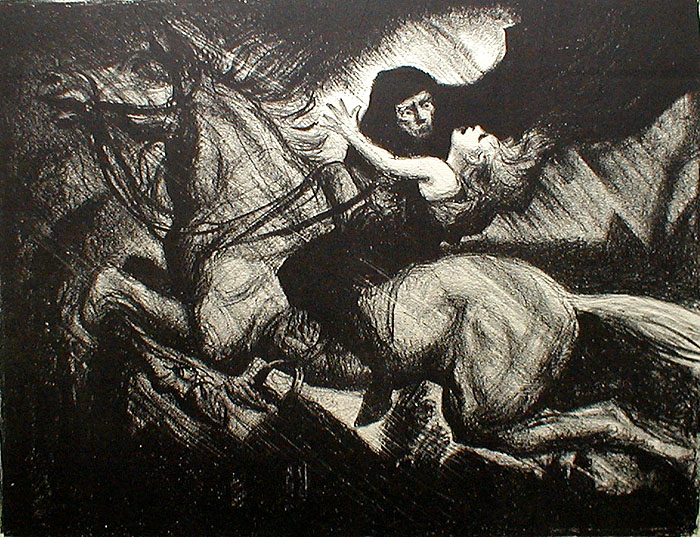
O Rei dos Elfos

by Johann Wolfgang von Goethe


Wer reitet so spät durch Nacht und Wind?
Es ist der Vater mit seinem Kind;
Er hat den Knaben wohl in dem Arm,
Er faßt ihn sicher, er hält ihn warm.

"Mein Sohn, was birgst du so bang dein Gesicht?" –
"Siehst, Vater, du den Erlkönig nicht?
Den Erlenkönig mit Kron und Schweif?" –
"Mein Sohn, es ist ein Nebelstreif."

"Du liebes Kind, komm, geh mit mir!
Gar schöne Spiele spiel' ich mit dir;
Manch' bunte Blumen sind an dem Strand,
Meine Mutter hat manch gülden Gewand." –

"Mein Vater, mein Vater, und hörest du nicht,
Was Erlenkönig mir leise verspricht?" –
"Sei ruhig, bleibe ruhig, mein Kind;
In dürren Blättern säuselt der Wind." –

"Willst, feiner Knabe, du mit mir gehen?
Meine Töchter sollen dich warten schön;
Meine Töchter führen den nächtlichen Reihn,
Und wiegen und tanzen und singen dich ein." –

"Mein Vater, mein Vater, und siehst du nicht dort
Erlkönigs Töchter am düstern Ort?" –
"Mein Sohn, mein Sohn, ich seh es genau:
Es scheinen die alten Weiden so grau. –"

"Ich liebe dich, mich reizt deine schöne Gestalt;
Und bist du nicht willig, so brauch ich Gewalt." –
"Mein Vater, mein Vater, jetzt faßt er mich an!
Erlkönig hat mir ein Leids getan!" –

Dem Vater grauset's, er reitet geschwind,
Er hält in Armen das ächzende Kind,
Erreicht den Hof mit Müh' und Not;
In seinen Armen das Kind war tot.


quinta-feira, 26 de julho de 2012

My Last Duchess - Lucrécia de Médici


by Robert Browning


Lucrézia de Médici por Bronzino
Robert Browning
That's my last Duchess painted on the wall,
Looking as if she were alive. I call
That piece a wonder, now; Frà Pandolf's hands
Worked busily a day, and there she stands.
Will't please you sit and look at her?
I said 'Fra Pandolf' by design, for never read
Strangers like you that pictured countenance,
The depth and passion of its earnest glance,
But to myself they turned (since none puts by
The curtain I have drawn for you, but I)
And seemed as they would ask me, if they durst,
How such a glance came there; so, not the first
Are you to turn and ask thus. Sir, 'twas not
Her Husband's presence only, called that spot
Of joy into the Duchess' cheek; perhaps
Fra Pandolf chanced to say "Her mantle laps
Over my lady's wrist too much", or "Paint
Must never hope to reproduce the faint
Half-flush that dies along her throat"; such stuff
Was courtesy, she thought, and cause enough
For calling up that spot of joy. She had
A heart—how shall I say?—too soon made glad,
Too easily impressed; she liked whate'er
She looked on, and her looks went everywhere.
Sir, 'twas all one! My favour at her breast,
The dropping of the daylight in the West,
The bough of cherries some officious fool
Broke in the orchard for her, the white mule
She rode with round the terrace—all and each
Would draw from her alike the approving speech,
Or blush, at least. She thanked men,—! Good! but thanked
Somehow—I know not how—as if she ranked
My gift of a nine-hundred-years-old name
With anybody's gift. Who'd stood to blame
This sort of trifling? Even had you skill
In speech—(which I have not)—to make your will
Quite clear to such an one, and say, "Just this
Or that in you disgusts me; here you miss,
Or there exceed the mark"—and if she let
Herself be lessoned on, nor plainly set
Her wits to yours, forsooth, and made excuse,—
E'en then would be some stooping; and I chose
Never to stoop. Oh sir, she smiled, no doubt,
Whene'er I passed her; but who passed without
Much the same smile? This grew, I gave commands;
Then all smiles stopped together. There she stands
As if alive. Will't please you rise? We'll meet
The company below, then, I repeat,
The Count your master's known munificence
Is ample warrant that no just pretence
Of mine for dowry will be disallowed;
Though his fair daughter's self, as I avowed
At starting, is my object. Nay, we'll go
Together down, sir. Notice Neptune, though,
Taming a sea-horse, thought a rarity,
Which Claus of Innsbruck cast in bronze for me!


domingo, 22 de julho de 2012

quarta-feira, 11 de julho de 2012

Canção do exílio

by Gonçalves Dias

Folha de rosto dos primeiros cantos

Minha terra tem palmeiras,
Onde canta o Sabiá;
As aves que aqui gorjeiam,
Não gorjeiam como lá.

Nosso céu tem mais estrelas,
Nossas várzeas têm mais flores,
Nossos bosques têm mais vida,
Nossa vida mais amores.

Em cismar, sozinho, à noite,
Mais prazer encontro eu lá;
Minha terra tem palmeiras,
Onde canta o Sabiá.

Minha terra tem primores,
Que tais não encontro eu cá;
Em cismar - sozinho, à noite -
Mais prazer encontro eu lá;
Minha terra tem palmeiras,
Onde canta o Sabiá.

Não permita Deus que eu morra,
Sem que eu volte para lá;
Sem que desfrute os primores
Que não encontro por cá;
Sem qu'inda aviste as palmeiras,
Onde canta o Sabiá."


sábado, 7 de julho de 2012

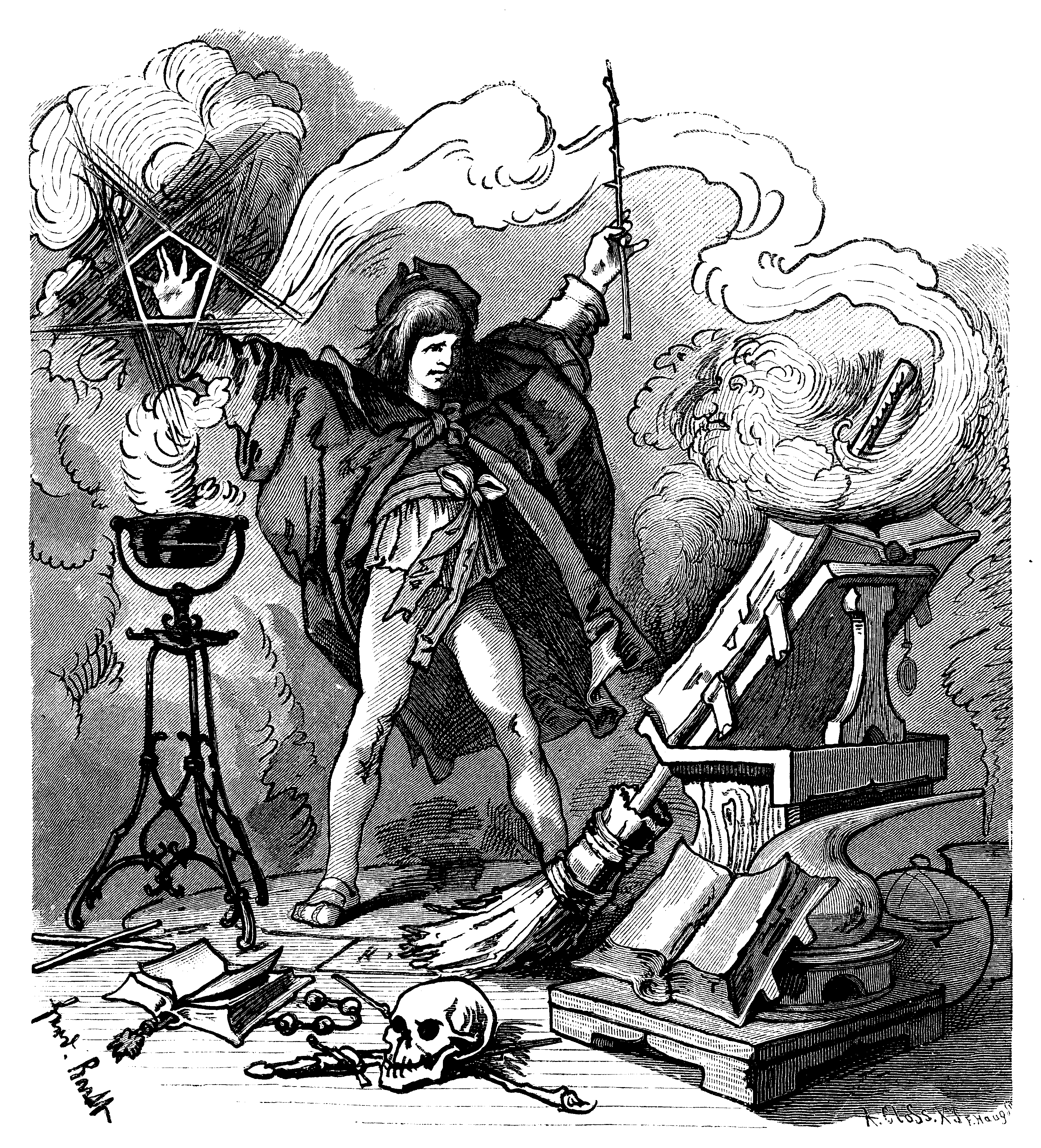
Der Zauberlehrling

by Johann Wolfgang von Goethe

Johann Wolfgang von Goethe


Hat der alte Hexenmeister,
Sich doch einmal wegbegeben!
Und nun sollen seine Geister
Auch nach meinem Willen leben.

Seine Wort und Werke                          5
Merkt ich, und den Brauch,
Und mit Geistesstärke
Thu ich Wunder auch.
Walle! walle!

Manche Strecke,                                   10
Daß zum Zwecke,
Wasser fließe,
Und, mit reichem vollem Schwalle,
Zu dem Bade sich ergieße.

Und nun komm du alter Besen,              15
Nimm die schlechten Lumpenhüllen,
Bist schon lange Knecht gewesen.
Nun erfülle meinen Willen.
Auf zwey Beinen stehe,

Oben sey ein Kopf,                                20
Eile nun und gehe
Mit dem Wassertopf.
Walle! walle!
Manche Strecke,

Daß zum Zwecke,                                  25
Wasser fließe,
Und, mit reichem vollem Schwalle,
Zu dem Bade sich ergieße.
Seht er läuft zum Ufer nieder,

Warlich ist schon an dem Flusse,           30
Und mit Blitzesschnelle wieder
Ist er hier mit raschem Gusse.
Schon zum zweytenmale!
Wie das Becken schwillt!

Wie sich jede Schaale                           35
Voll mit Wasser füllt!
Stehe! Stehe!
Denn wir haben
Deiner Gaben

Vollgemessen! –                                   40
Ach ich merk es, wehe! wehe!
Hab ich doch das Wort vergessen!
Ach! das Wort, worauf am Ende
Er das wird was er gewesen.

Ach er läuft und bringt behende,           45
Wärst du doch der alte Besen!
Immer neue Güsse
Bringt er schnell herein,
Ach! und hundert Flüsse

Stürzen auf mich ein.                            50
Nein nicht länger
Kann ichs lassen,
Will ihn fassen.
Das ist Tücke!

Ach! nun wird mir immer bänger!          55
Welche Mine! welche Blicke!
O! du Ausgeburt der Hölle!
Soll das ganze Haus ersaufen?
Seh ich über jede Schwelle

Doch schon Wasserströme laufen.        60
Ein verruchter Besen
Der nicht hören will!
Stock! der du gewesen,
Steh doch wieder still!

Willsts am Ende                                   65
Gar nicht lassen;
Will dich fassen,
Will dich halten,
Und das alte Holz behende

Mit dem scharfen Beile spalten.             70
Seht da kommt er schleppend wieder!
Wie ich mich nun auf dich werfe,
Gleich, o Kobold! liegst du nieder,
Krachend trifft die glatte Schärfe.

Warlich braf getroffen!                          75
Seht er ist entzwey,
Und nun kann ich hoffen,
Und ich athme frey!
Wehe! wehe!

Beyde Theile                                         80
Stehn, in Eile,
Schon als Knechte
Völlig fertig in die Höhe!
Helft mir ach ihr hohen Mächte!


Und sie laufen! Naß und nässer              85
Wirds im Saal und auf den Stufen,
Welch entsetzliches Gewässer!
Herr und Meister! hör mich rufen!
Ach! da kommt der Meister!

Herr, die Noth ist groß,                          90
Die ich rief die Geister
Werd ich nun nicht los.
„In die Ecke,
Besen! Besen!

Seyds gewesen.                                    95
Denn als Geister
Ruft euch nur zu seinem Zwecke,
Erst hervor der alte Meister.“


sábado, 30 de junho de 2012

The charge of the Light brigade

by Alfred Lord Tennyson


Half a league half a league,
Lord Tennyson
Half a league onward,
All in the valley of Death
Rode the six hundred:
'Forward, the Light Brigade!
Charge for the guns' he said:
Into the valley of Death
Rode the six hundred.

'Forward, the Light Brigade!'
Was there a man dismay'd ?
Not tho' the soldier knew
Some one had blunder'd:
Theirs not to make reply,
Theirs not to reason why,
Theirs but to do & die,
Into the valley of Death
Rode the six hundred.

Cannon to right of them,
Cannon to left of them,
Cannon in front of them
Volley'd & thunder'd;
Richard Caton Woodville - Charge of the light brigade
Storm'd at with shot and shell,
Boldly they rode and well,
Into the jaws of Death,
Into the mouth of Hell
Rode the six hundred.

Flash'd all their sabres bare,
Flash'd as they turn'd in air
Sabring the gunners there,
Charging an army while
All the world wonder'd:
Plunged in the battery-smoke
Right thro' the line they broke;
Cossack & Russian
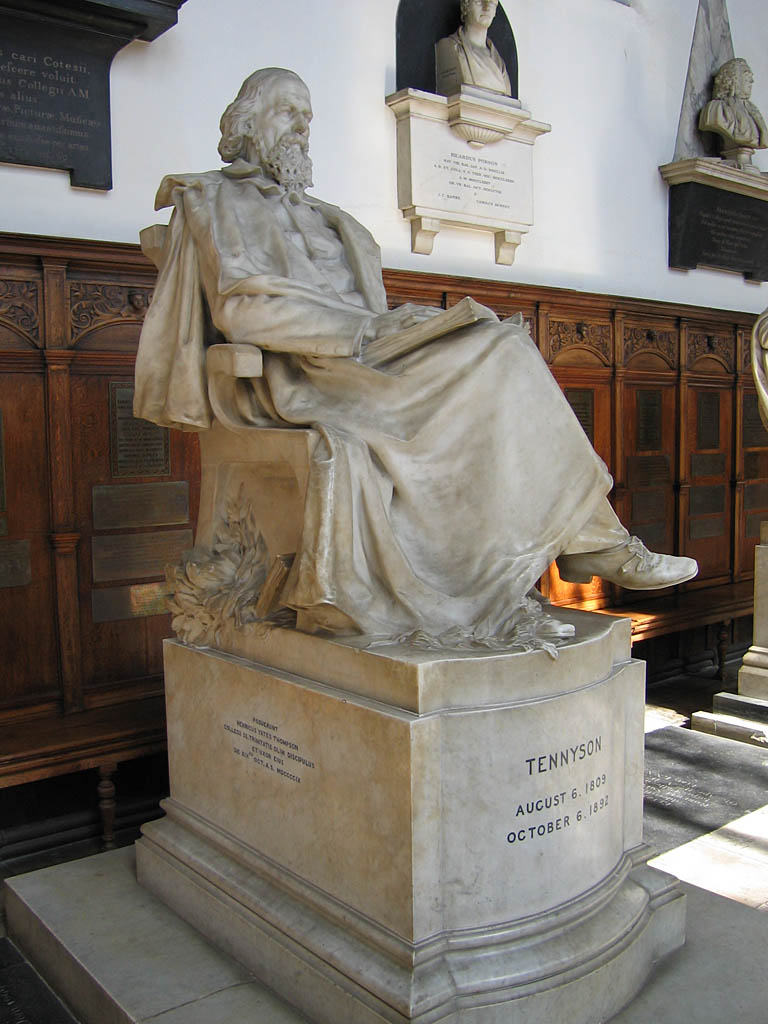
Tennyson - Trinity College - Cambridge
Reel'd from the sabre-stroke,
Shatter'd & sunder'd.
Then they rode back, but not
Not the six hundred.

Cannon to right of them,
Cannon to left of them,
Cannon behind them
Volley'd and thunder'd;
Storm'd at with shot and shell,
While horse & hero fell,
They that had fought so well
Came thro' the jaws of Death,
Back from the mouth of Hell,
All that was left of them,
Left of six hundred.

When can their glory fade?
O the wild charge they made!
All the world wonder'd.
Honour the charge they made!
Honour the Light Brigade,
Noble six hundred!


quarta-feira, 27 de junho de 2012

O Jabberwocky - Precursor of Finnegans Wake ?


Jabberwocky - A sound poem
Jabberwocky

by Lewis Carroll (Charles Lutwidge Dodgson)


First edition of Through the looking-glass
'Twas brillig, and the slithy toves
Did gyre and gimble in the wabe;
All mimsy were the borogoves,
And the mome raths outgrabe.

"Beware the Jabberwock, my son!
The jaws that bite, the claws that catch!
Beware the Jubjub bird, and shun
The frumious Bandersnatch!"

He took his vorpal sword in hand:
Long time the manxome foe he sought--
So rested he by the Tumtum tree,
And stood awhile in thought.

And, as in uffish thought he stood,
The Jabberwock, with eyes of flame,
Came whiffling through the tulgey wood,
And burbled as it came!

One two! One two! And through and through
The vorpal blade went snicker-snack!
He left it dead, and with its head
He went galumphing back.

"And hast thou slain the Jabberwock?
Come to my arms, my beamish boy!
O frabjous day! Callooh! Callay!"
He chortled in his joy.


'Twas brillig, and the slithy toves
Did gyre and gimble in the wabe;
All mimsy were the borogoves,
And the mome raths outgrabe.